

June 24, 2026

Content Marketing for Lease-Ups

Rendered clubroom lounge with floor-to-ceiling windows at Lyra multifamily community

Virtual tour content marketing turns one production investment into campaign-ready visuals for multifamily lease-ups, ads, websites, and leasing teams.

A still rendering is a finished asset. A virtual tour can become a content source.

That distinction matters when your team is planning a full lease-up campaign, not just filling one spot on a website. In virtual tour content marketing, the value of a rendered tour goes beyond the interactive experience itself. The same production can support websites, paid ads, email campaigns, ILS listings, social content, leasing presentations, print collateral, and more.

A still rendering gives your team one polished view. A virtual tour gives your prospects an experience, and gives your marketing team more source material to work with after launch.

The goal is not to choose one format forever. Strong lease-up marketing often uses both. The better question is what kind of visual system your campaign needs.

01

Still Rendering

One controlled, high-impact view

  • Art-directed for a single message
  • Hero image for homepage, brochure, signage
  • Premium first impression
  • Fixed angle, mood, and moment

Best when the brief is one powerful image that sells the space

02

Virtual Tour

An experience and a content library

  • Prospects move through the space
  • Many viewpoints, details, lifestyle cues
  • Source material for every channel
  • Useful long after launch day

Best when the campaign needs range across the full lease-up

Why Still Renderings Still Matter

Still renderings are still essential in real estate visualization. A controlled, art-directed still can do something very specific: create a high-impact first impression.

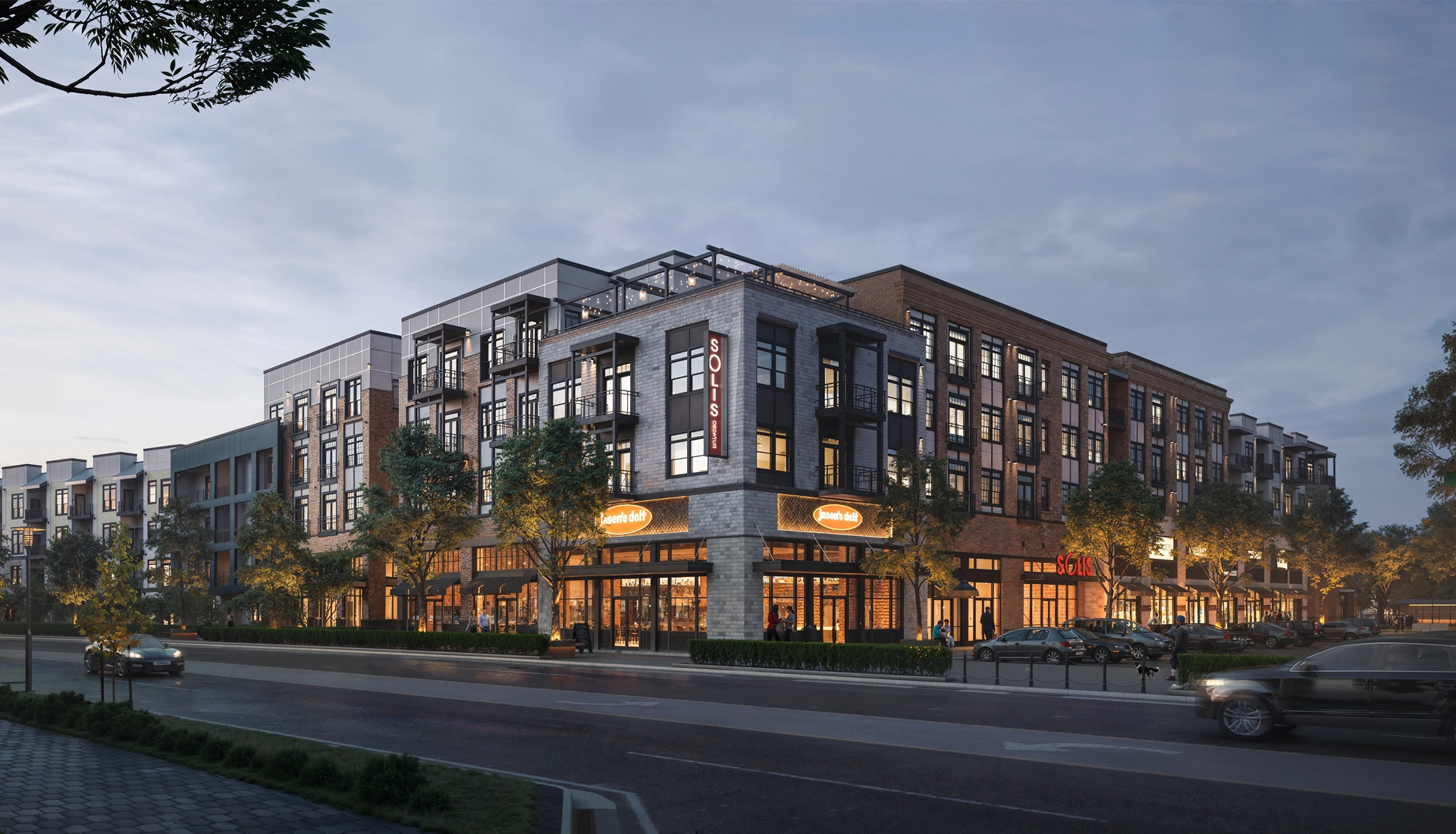
For multifamily, student housing, senior living, and mixed-use projects, stills are often the right choice for hero moments. They give the marketing team a polished image for the homepage, brochure cover, leasing banner, construction fence, email header, or paid campaign creative. They can frame the architecture, amenity, lobby, model unit, rooftop, or pool deck exactly the way the brand needs it seen.

That level of control matters. A custom still rendering can be composed around one message, one angle, one mood, and one conversion moment. It is especially useful when the project needs a signature image that feels premium, deliberate, and memorable.

So stills are not the lesser option. They are focused assets. When the assignment is "we need one powerful image that sells this space," a still rendering is often the cleanest answer.
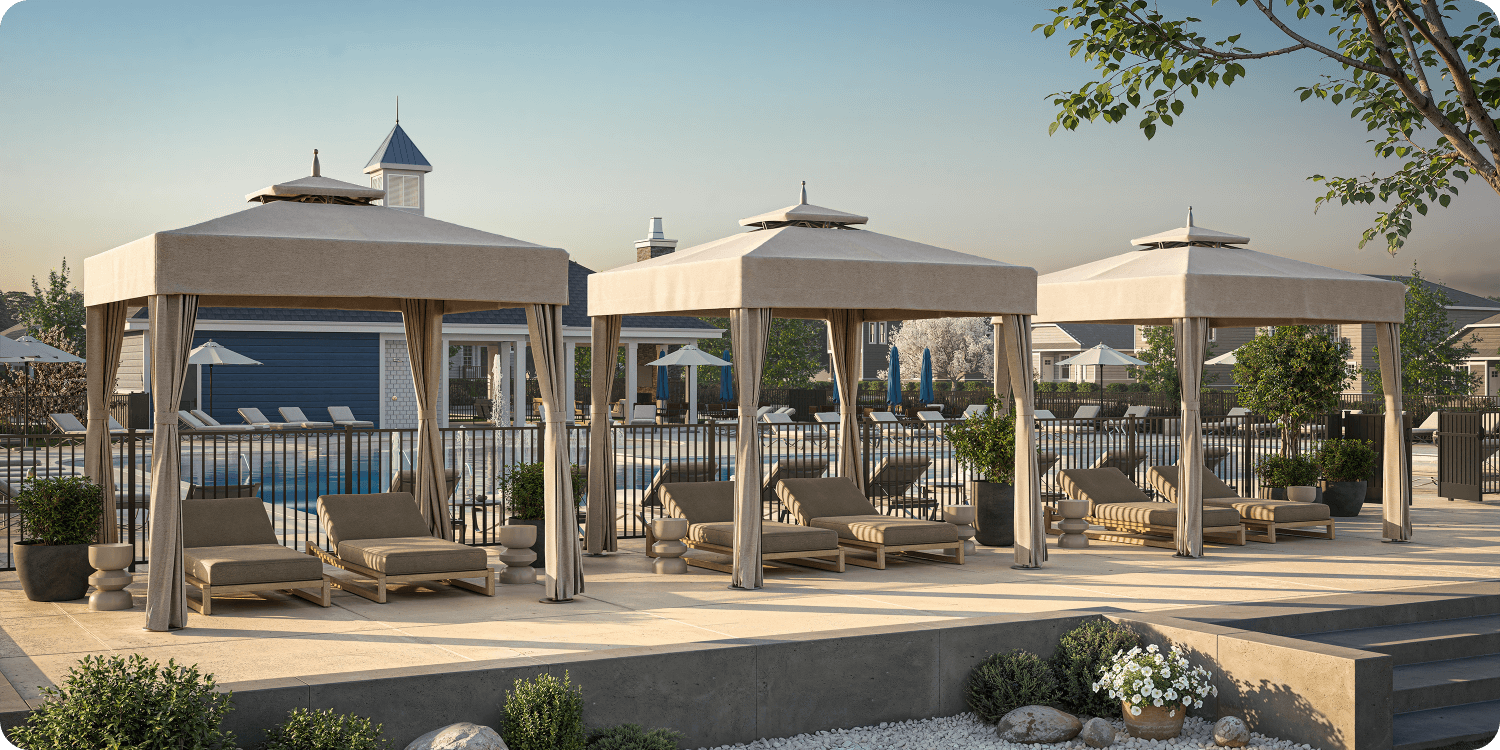
Why Virtual Tours Create More Content Mileage

A rendered virtual tour starts with a different kind of value. It gives prospects a way to move through the property, understand the space, and experience key environments before they visit in person.

But for the marketing team, the tour also contains a deeper asset library.

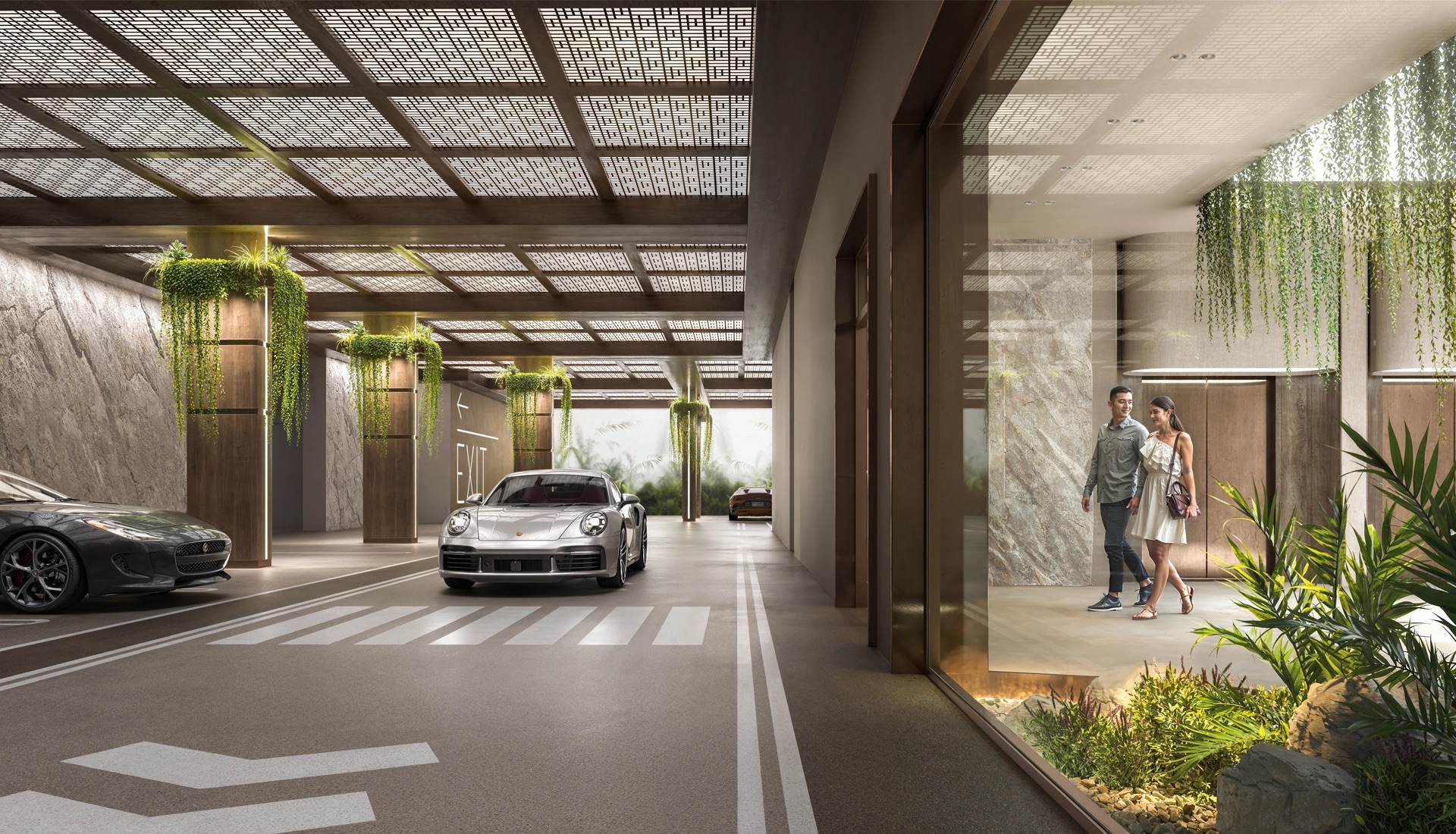
A tour may include units, amenity spaces, corridors, lobbies, outdoor areas, fitness rooms, coworking lounges, clubrooms, rooftops, pools, leasing offices, and branded transition moments. Inside those environments are multiple viewpoints, details, furniture groupings, finish moments, lifestyle cues, and campaign angles.

That means the tour is not only a walkthrough. It is source material.

A single still rendering gives you one finished view. A rendered tour gives you a larger visual world that can be revisited, cropped, captured, edited, and adapted for different channels. That is where multifamily virtual tours can become especially useful for lease-up marketing assets.

The leasing team needs immersive tools. The marketing team needs flexible content. A well-planned tour can support both.
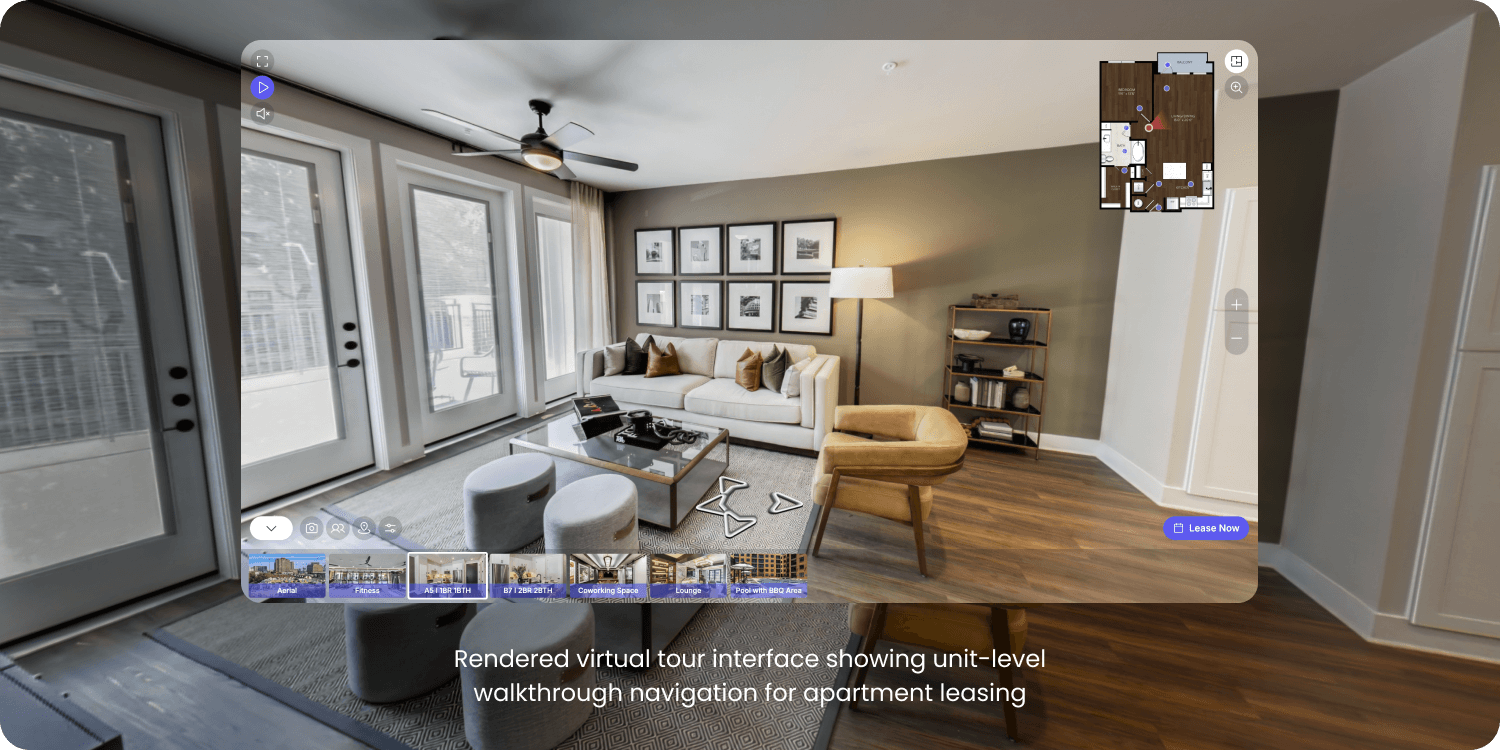
What a Virtual Tour Can Become

When a virtual tour is created with campaign use in mind, it can feed a wide range of apartment marketing content. Not every capture from a tour replaces a custom hero rendering, but many can become highly useful supporting assets across the campaign.

A rendered tour can become:

Still images from different angles
Amenity and unit detail shots
Social graphics
Short-form motion content
Vibe content
AI-assisted visuals
Website and landing page imagery
ILS and listing visuals
Paid ad creative
Email visuals
Print and leasing collateral
Leasing presentation assets

This is where planning makes the difference. If the tour is only treated as a digital walkthrough, your team may use it once and move on. If it is planned as part of a broader content system, the same environment can keep supporting the campaign long after the tour goes live.

For example, a clubhouse moment might become a website image, a social post, a cropped detail shot for an email, and a short motion clip for paid media. A unit kitchen scene might support ILS imagery, leasing deck slides, finish callouts, and targeted content for a specific floor plan.

That is more mileage from one production investment.

The Budget Conversation: Upfront Cost vs. Useful Life

A virtual tour may cost more upfront than a single still rendering. That is a real budget consideration, and it should not be ignored.

But for a full lease-up campaign, the better question is not simply, “Which asset is cheaper?”

The better question is: “Which asset gives the marketing and leasing team more to work with over the life of the campaign?”

A single still may be the most efficient choice when your team needs one specific image. A virtual tour may be the smarter investment when the campaign needs an immersive leasing experience plus a larger set of usable visuals.

That useful life matters. Lease-up campaigns are not one-channel efforts. Teams need content for the property website, landing pages, paid ads, organic social, broker communication, resident email, ILS listings, leasing follow-up, printed materials, and internal presentations. Each channel has different size, crop, motion, and message requirements.

When the visual production plan accounts for that from the start, the final assets work harder. The tour does not just sit on the website as one feature. It becomes part of the campaign engine.

How to Decide What Your Project Needs

Use Stills When You Need Controlled Hero Moments

Choose still renderings when your team needs a few highly polished, specific views. These are ideal for brand-defining images, website hero placements, brochure covers, signage, construction banners, paid ad anchors, and major first impressions.

This is especially useful when the message depends on one carefully composed scene.

Use a Virtual Tour When You Need an Experience and a Library

Choose a rendered virtual tour when your team needs prospects to understand the space more fully, especially before the property is ready to tour in person.

A virtual tour is also a strong fit when the marketing team needs a broader source of content for multiple channels. For 3D rendering for apartments, this can be especially valuable when units, amenities, and lifestyle spaces all need to be represented before photography is available.

Use Both for a Premium Lease-Up Campaign

For many lease-ups, the strongest approach is not stills or tour. It is both.

Use custom still renderings for the most important hero images. Use a rendered virtual tour to create the interactive leasing experience and a deeper asset library. Together, they give the campaign both polish and range.

That is how visual planning becomes more strategic. You are not buying isolated deliverables. You are building a content system that can support leasing, marketing, and brand needs across the campaign.

Plan Visual Assets as a System

The strongest lease-up visuals are planned as a system, not as one-off files.

A still rendering can deliver a beautiful, controlled, high-impact view. A virtual tour can give prospects an interactive experience and give the marketing team more material to work with across the campaign.

When your project needs more than one hero image, the tour may become one of the most useful content sources in the visual package. It can help your team create campaign-ready content with a longer shelf life, more flexibility, and more ways to support leasing before the property is fully photographed.
June 24, 2026

Content Marketing for Lease-Ups

Virtual tour content marketing turns one production investment into campaign-ready visuals for multifamily lease-ups, ads, websites, and leasing teams.

Rendered clubroom lounge with floor-to-ceiling windows at Lyra multifamily community

A still rendering is a finished asset. A virtual tour can become a content source.

That distinction matters when your team is planning a full lease-up campaign, not just filling one spot on a website. In virtual tour content marketing, the value of a rendered tour goes beyond the interactive experience itself. The same production can support websites, paid ads, email campaigns, ILS listings, social content, leasing presentations, print collateral, and more.

A still rendering gives your team one polished view. A virtual tour gives your prospects an experience, and gives your marketing team more source material to work with after launch.

The goal is not to choose one format forever. Strong lease-up marketing often uses both. The better question is what kind of visual system your campaign needs.

01

Still Rendering

One controlled, high-impact view

  • Art-directed for a single message
  • Hero image for homepage, brochure, signage
  • Premium first impression
  • Fixed angle, mood, and moment

Best when the brief is one powerful image that sells the space

02

Virtual Tour

An experience and a content library

  • Prospects move through the space
  • Many viewpoints, details, lifestyle cues
  • Source material for every channel
  • Useful long after launch day

Best when the campaign needs range across the full lease-up

Why Still Renderings Still Matter

Still renderings are still essential in real estate visualization. A controlled, art-directed still can do something very specific: create a high-impact first impression.

For multifamily, student housing, senior living, and mixed-use projects, stills are often the right choice for hero moments. They give the marketing team a polished image for the homepage, brochure cover, leasing banner, construction fence, email header, or paid campaign creative. They can frame the architecture, amenity, lobby, model unit, rooftop, or pool deck exactly the way the brand needs it seen.

That level of control matters. A custom still rendering can be composed around one message, one angle, one mood, and one conversion moment. It is especially useful when the project needs a signature image that feels premium, deliberate, and memorable.

So stills are not the lesser option. They are focused assets. When the assignment is "we need one powerful image that sells this space," a still rendering is often the cleanest answer.

Why Virtual Tours Create More Content Mileage

A rendered virtual tour starts with a different kind of value. It gives prospects a way to move through the property, understand the space, and experience key environments before they visit in person.

But for the marketing team, the tour also contains a deeper asset library.

A tour may include units, amenity spaces, corridors, lobbies, outdoor areas, fitness rooms, coworking lounges, clubrooms, rooftops, pools, leasing offices, and branded transition moments. Inside those environments are multiple viewpoints, details, furniture groupings, finish moments, lifestyle cues, and campaign angles.

That means the tour is not only a walkthrough. It is source material.

A single still rendering gives you one finished view. A rendered tour gives you a larger visual world that can be revisited, cropped, captured, edited, and adapted for different channels. That is where multifamily virtual tours can become especially useful for lease-up marketing assets.

The leasing team needs immersive tools. The marketing team needs flexible content. A well-planned tour can support both.

What a Virtual Tour Can Become

When a virtual tour is created with campaign use in mind, it can feed a wide range of apartment marketing content. Not every capture from a tour replaces a custom hero rendering, but many can become highly useful supporting assets across the campaign.

A rendered tour can become:

Still images from different angles
Amenity and unit detail shots
Social graphics
Short-form motion content
Vibe content
AI-assisted visuals
Website and landing page imagery
ILS and listing visuals
Paid ad creative
Email visuals
Print and leasing collateral
Leasing presentation assets

This is where planning makes the difference. If the tour is only treated as a digital walkthrough, your team may use it once and move on. If it is planned as part of a broader content system, the same environment can keep supporting the campaign long after the tour goes live.

For example, a clubhouse moment might become a website image, a social post, a cropped detail shot for an email, and a short motion clip for paid media. A unit kitchen scene might support ILS imagery, leasing deck slides, finish callouts, and targeted content for a specific floor plan.

That is more mileage from one production investment.

The Budget Conversation: Upfront Cost vs. Useful Life

A virtual tour may cost more upfront than a single still rendering. That is a real budget consideration, and it should not be ignored.

But for a full lease-up campaign, the better question is not simply, “Which asset is cheaper?”

The better question is: “Which asset gives the marketing and leasing team more to work with over the life of the campaign?”

A single still may be the most efficient choice when your team needs one specific image. A virtual tour may be the smarter investment when the campaign needs an immersive leasing experience plus a larger set of usable visuals.

That useful life matters. Lease-up campaigns are not one-channel efforts. Teams need content for the property website, landing pages, paid ads, organic social, broker communication, resident email, ILS listings, leasing follow-up, printed materials, and internal presentations. Each channel has different size, crop, motion, and message requirements.

When the visual production plan accounts for that from the start, the final assets work harder. The tour does not just sit on the website as one feature. It becomes part of the campaign engine.

How to Decide What Your Project Needs

Use Stills When You Need Controlled Hero Moments

Choose still renderings when your team needs a few highly polished, specific views. These are ideal for brand-defining images, website hero placements, brochure covers, signage, construction banners, paid ad anchors, and major first impressions.

This is especially useful when the message depends on one carefully composed scene.

Use a Virtual Tour When You Need an Experience and a Library

Choose a rendered virtual tour when your team needs prospects to understand the space more fully, especially before the property is ready to tour in person.

A virtual tour is also a strong fit when the marketing team needs a broader source of content for multiple channels. For 3D rendering for apartments, this can be especially valuable when units, amenities, and lifestyle spaces all need to be represented before photography is available.

Use Both for a Premium Lease-Up Campaign

For many lease-ups, the strongest approach is not stills or tour. It is both.

Use custom still renderings for the most important hero images. Use a rendered virtual tour to create the interactive leasing experience and a deeper asset library. Together, they give the campaign both polish and range.

That is how visual planning becomes more strategic. You are not buying isolated deliverables. You are building a content system that can support leasing, marketing, and brand needs across the campaign.

Plan Visual Assets as a System

The strongest lease-up visuals are planned as a system, not as one-off files.

A still rendering can deliver a beautiful, controlled, high-impact view. A virtual tour can give prospects an interactive experience and give the marketing team more material to work with across the campaign.

When your project needs more than one hero image, the tour may become one of the most useful content sources in the visual package. It can help your team create campaign-ready content with a longer shelf life, more flexibility, and more ways to support leasing before the property is fully photographed.
Let’s Bring Your Vision to Life

Thank you! Your submission has been received!
Oops! Something went wrong while submitting the form.